

First-Time Buyer's Guide to the Charlotte Metro
Buying your first home is one of the most significant financial decisions you will ever make. It is also one of the most emotionally charged. The Charlotte metro area is a wonderful place to put down roots, but the process of getting there — from the first mortgage conversation to the moment you receive your keys — can feel overwhelming without a clear roadmap. This guide is designed to give you exactly that: a plain-language walkthrough of every major step, written by someone who has both practiced law and guided first-time buyers through the Charlotte market.

Step 1: Understand What You Can Actually Afford
Before you look at a single listing, sit down with a mortgage lender and get pre-approved — not just pre-qualified. Pre-qualification is a rough estimate based on self-reported income. Pre-approval involves a full credit pull, income verification, and asset documentation. Sellers in Charlotte's competitive market will not take your offer seriously without it.
A common rule of thumb is to keep your total housing payment (principal, interest, taxes, and insurance) at or below 28% of your gross monthly income. In practice, lenders will often approve you for more than that, but being approved for a larger loan does not mean you should take it. Leave room in your budget for maintenance, HOA fees if applicable, and the unexpected expenses that come with homeownership.
Step 2: Know Your True Upfront Costs
First-time buyers are often surprised by how much cash is required at closing beyond the down payment. Here is a realistic breakdown for a $400,000 home in the Charlotte area:
| Cost Item | Typical Range |
|---|---|
| Down payment (5%–20%) | $20,000 – $80,000 |
| Lender origination & underwriting fees | $1,500 – $3,000 |
| Home inspection | $350 – $600 |
| Appraisal | $500 – $800 |
| Title insurance & attorney fees (NC requires a closing attorney) | $1,200 – $2,500 |
| Prepaid items (homeowner's insurance, property tax escrow) | $2,000 – $4,000 |
| Total closing costs (excluding down payment) | $5,550 – $10,900 |
North Carolina is an attorney-state, which means a licensed real estate attorney — not a title company — must conduct your closing. Budget accordingly, and ask your lender for a Loan Estimate within three business days of submitting your application. That document will itemize every anticipated cost.
Step 3: Choose the Right Neighborhood for Your Life
Charlotte is a city of distinct neighborhoods, each with its own personality, price point, and commute profile. Here is a quick orientation for first-time buyers:
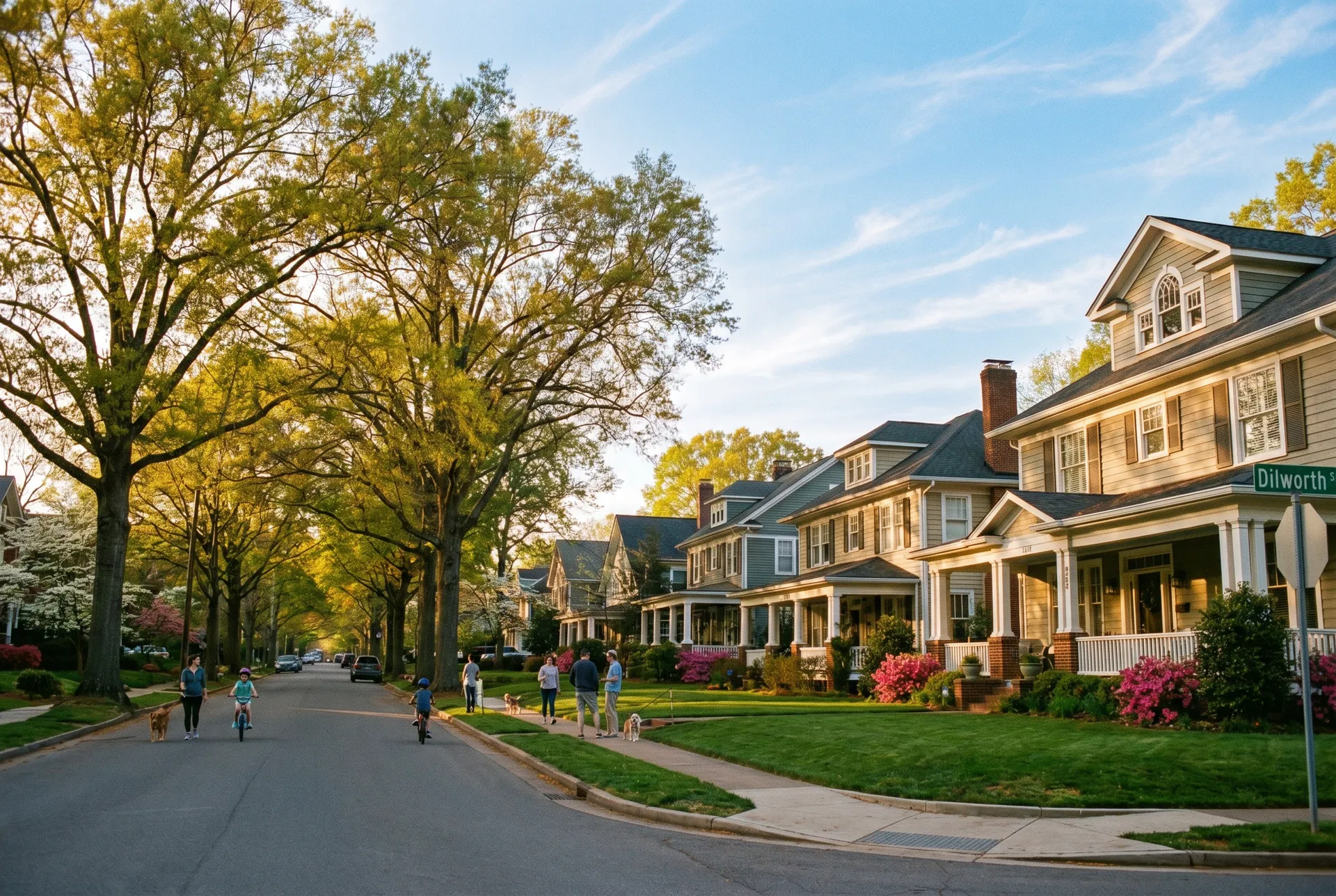
South End and Dilworth are walkable, urban, and close to the light rail. Expect higher price-per-square-foot but strong appreciation and rental demand. Ballantyne and Pineville offer newer construction, top-rated schools, and suburban amenities at a more accessible price point. NoDa and Plaza Midwood attract buyers who want character, arts, and a tight-knit community feel. Concord and Kannapolis in Cabarrus County provide the most affordable entry points in the metro while still offering easy access to Charlotte employment centers.
Step 4: Making a Competitive Offer
In Charlotte's current market, well-priced homes in desirable neighborhoods often receive multiple offers within 48–72 hours of listing. To compete effectively, your offer should include a strong pre-approval letter from a reputable lender, an earnest money deposit of at least 1% of the purchase price (2%–3% signals seriousness), and a due diligence fee — a North Carolina-specific payment made directly to the seller that is non-refundable but negotiable. The due diligence period is your window to conduct inspections and back out for any reason; the fee compensates the seller for taking the home off the market during that time.
Step 5: The Inspection Is Not Optional
No matter how perfect a home appears, never waive the inspection. A qualified home inspector will evaluate the roof, foundation, HVAC, electrical, plumbing, and dozens of other systems. In Charlotte, pay particular attention to HVAC age (units over 12–15 years old are near end-of-life), crawl space moisture (common in the Piedmont region), and any signs of polybutylene plumbing in homes built between 1978 and 1995. The inspection report is not a list of reasons to walk away — it is a negotiating tool and a maintenance roadmap.
A Final Word

The homebuying process has many moving parts, but it is entirely navigable with the right guidance. My role as your advisor is to make sure you understand every document you sign, every dollar you spend, and every decision you make. If you are ready to begin your search — or simply want to understand what the process would look like for your specific situation — I am happy to have that conversation at no cost and no obligation.
Stay Ahead of the Charlotte Market
Weekly insights on pricing trends, new listings, and what's moving in NC & SC — delivered straight to your inbox.
Continue Reading
What Home Improvements Actually Return Your Money Before Selling in Charlotte?
Most sellers either over-invest in flashy renovations or skip critical fixes that buyers notice immediately. Here's what the data says about which improvements return the most in the Charlotte metro and which ones drain your budget without moving the needle.
Read Article
How to Price Your Home in Charlotte's 2026 Market
Pricing a home in Charlotte's 2026 market isn't about what you paid, what you need, or what your neighbor listed for. It's about what buyers are actually paying — right now, in your submarket. Here's how to get it right from day one.
Read Article