
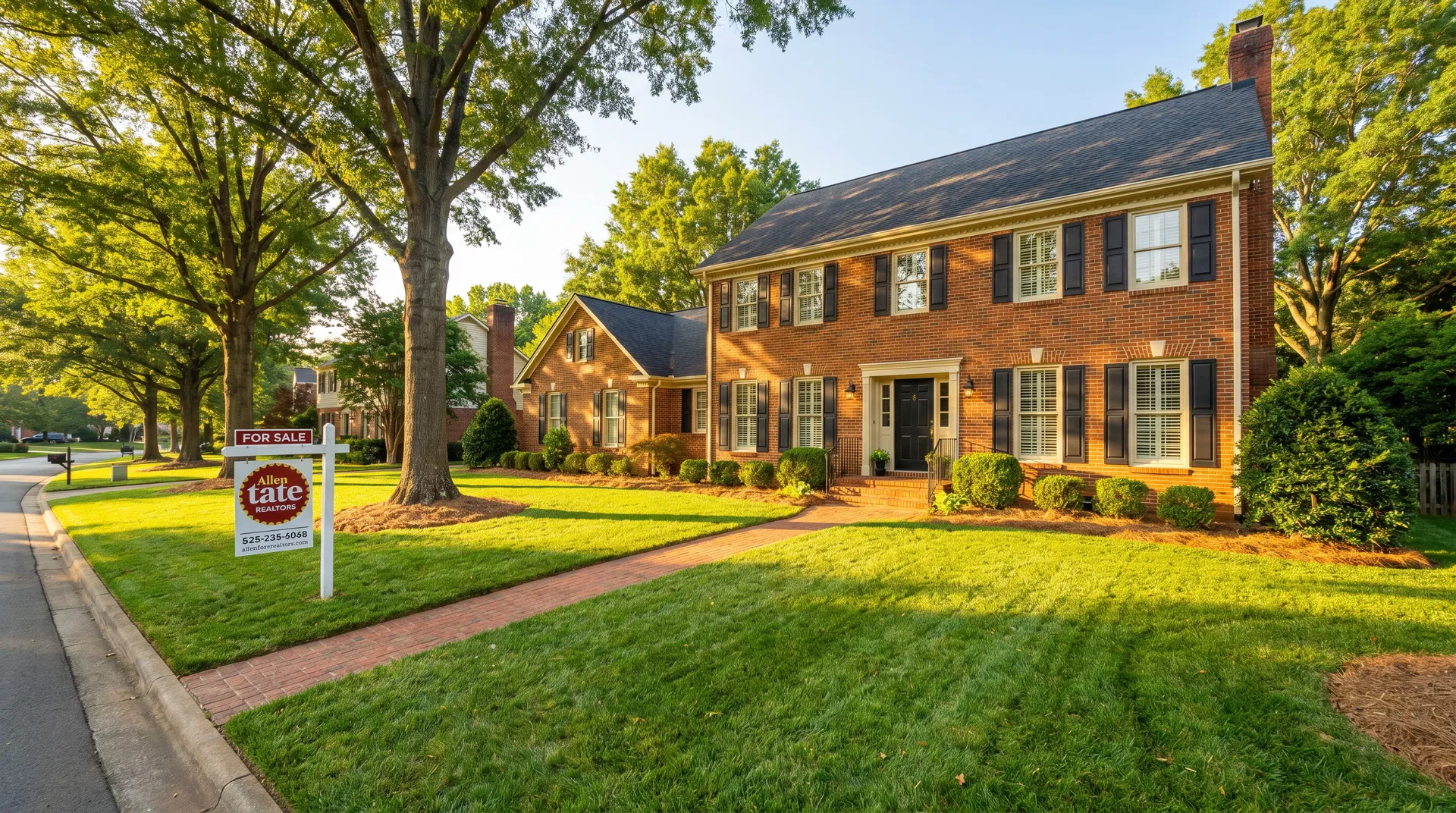
How Long Will It Take to Sell My Home — and What's the Best Month to List in Charlotte?
For sellers across the Charlotte metro area, timing the sale of a home is one of the most common questions I get — and one of the most misunderstood. Whether you're in Fort Mill or Uptown Charlotte, the instinct is to find the right month and wait for it. The reality is more nuanced: days on market and optimal listing windows vary significantly by submarket, and the factors you control — price, preparation, and marketing — consistently outperform calendar timing in today's balanced market.
Days on Market by Charlotte Submarket (Early 2026)
As of early 2026, the Charlotte metro shows a balanced environment with 3–5 months of inventory across most areas. Days on market (DOM) vary considerably by zip code and neighborhood, and those differences matter when you're planning your move. According to Canopy MLS data, here's where each major submarket stands:
| Submarket | Avg. Days on Market | Notes |
|---|---|---|
| Rock Hill | 73 days (down from 91) | Slight uptick in buyer activity; still slower than peak years |
| Huntersville (28078) | ~50 days | Birkdale area moves faster at 30–40 days when priced right |
| Fort Mill | 73 days | Median price dropped 15% YoY to $425K; buyer caution persists |
| Steele Creek / Tega Cay | ~60 days | Steady demand; new construction competing with resale |
| Uptown Charlotte (condos) | 30–90+ days | Wide range; building, floor, and view matter more than month |
The pattern here is not random. Rock Hill and Fort Mill are slower because they carry more inventory relative to demand, partly driven by new construction competition. Huntersville moves faster because of its proximity to Lake Norman and strong school district demand. Uptown's wide range reflects how building-specific the condo market is — a unit in The Ratcliffe with city views sells differently than a comparable unit in a less sought-after building on the same block.
Seasonal Timing: When Each Submarket Peaks
Historical data does show seasonal patterns in Charlotte, but they're not uniform across the metro. Sellers who apply national trends to a specific submarket often mistime their listing by weeks or months. Here's what the data actually shows:
Rock Hill's strongest selling window runs February through July, with peak buyer activity in late spring. Fort Mill historically sells fastest in September, capitalizing on families who want to be settled before the school year starts — a counterintuitive finding that surprises most sellers. Huntersville and Steele Creek peak from April to June, aligning with pre-summer moves and school-year planning. Uptown's condo market is the least calendar-driven of any submarket — a well-priced unit with strong views will move in January just as readily as in May.
The overarching truth, though, is that timing matters less than readiness. A well-priced, professionally staged home in January consistently outperforms an unprepared listing in May. In a balanced market with 3–5 months of inventory, buyers have options — and they will wait for the right home at the right price rather than overpay for a home that isn't ready.

The Pricing and Preparation Multiplier
Pricing accuracy is the single biggest lever you have over your days on market. Data shows that homes priced 5% above recent sold comps sit 30–50% longer than those priced at or below market. On a 60-day average submarket, that means the difference between selling in 60 days and sitting for 80–90 days — which in a balanced market often triggers price reductions that signal distress to buyers and further extend your timeline.
The right benchmark is sold prices, not asking prices. Asking prices reflect seller optimism; sold prices reflect what buyers are actually paying. Price within 2–3% of recent sold comps within a half-mile radius, and you're targeting a sale within the average DOM for your area. Price above that range, and you're competing against the next listing that comes on at market value.
Preparation compounds the pricing effect. Allocating $2,000–$5,000 for paint, landscaping, and minor repairs can shave 10–15 days off your DOM, because buyers in a balanced market prioritize move-in-ready properties. Professional photography and targeted online marketing add another layer — homes with professional photos sell faster and closer to asking price than those with phone camera shots, regardless of submarket. Combined, preparation and marketing can reduce your DOM by 10–20 days compared to a comparable home that skips these steps.

How to Build Your Selling Timeline
Start by benchmarking your submarket's current DOM — check recent sales data on Canopy MLS or ask a local expert for real-time stats specific to your zip code or neighborhood. Berewick in Steele Creek moves differently than The Palisades; Birkdale in Huntersville moves differently than a standard 28078 listing. Submarket specificity matters.
Once you have your DOM benchmark, build a 30-day buffer into your personal timeline. Plan for the average DOM plus a margin for unexpected delays — inspection negotiations, financing hiccups, or a buyer who backs out during due diligence. If your submarket averages 60 days, plan for 90 before you're at the closing table. Then work backward from your target close date to determine when to start preparation, when to list, and when to coordinate your next move.
For timing, aim for your submarket's historical peak if your home is ready — April to June for Huntersville or Steele Creek, September for Fort Mill, February to July for Rock Hill. But don't delay a listing just to hit a seasonal window. If your home is staged and priced right, list as soon as possible. Waiting for a "magic month" while the market softens further is a risk that rarely pays off.
My Recommendation
Selling your home isn't about picking the perfect month — it's about aligning price, preparation, and market reality. The sellers who move quickly and at strong prices are the ones who did the work before listing: they priced accurately, prepared the home, and listed with a clear strategy for their specific submarket. The ones who struggle are the ones who waited for the right season and then listed at the wrong price.
Whether you're in Tega Cay or Uptown, the data is consistent: a strategic approach cuts time on market more reliably than waiting for a seasonal spike. You can navigate this with confidence by focusing on what you control.
If you're figuring out the best time to list or want a precise read on how long your home might take to sell in today's market, this is the kind of strategy I help people build. Let's map it out for your specific property when you're ready.
Stay Ahead of the Charlotte Market
Weekly insights on pricing trends, new listings, and what's moving in NC & SC — delivered straight to your inbox.
Seller's Guide Series
Continue the Series

What Home Improvements Actually Return Your Money Before Selling in Charlotte?
Most sellers either over-invest in flashy renovations or skip critical fixes that buyers notice immediately. Here's what the data says about which improvements return the most in the Charlotte metro and which ones drain your budget without moving the needle.
Read Article
How to Price Your Home in Charlotte's 2026 Market
Pricing a home in Charlotte's 2026 market isn't about what you paid, what you need, or what your neighbor listed for. It's about what buyers are actually paying — right now, in your submarket. Here's how to get it right from day one.
Read Article